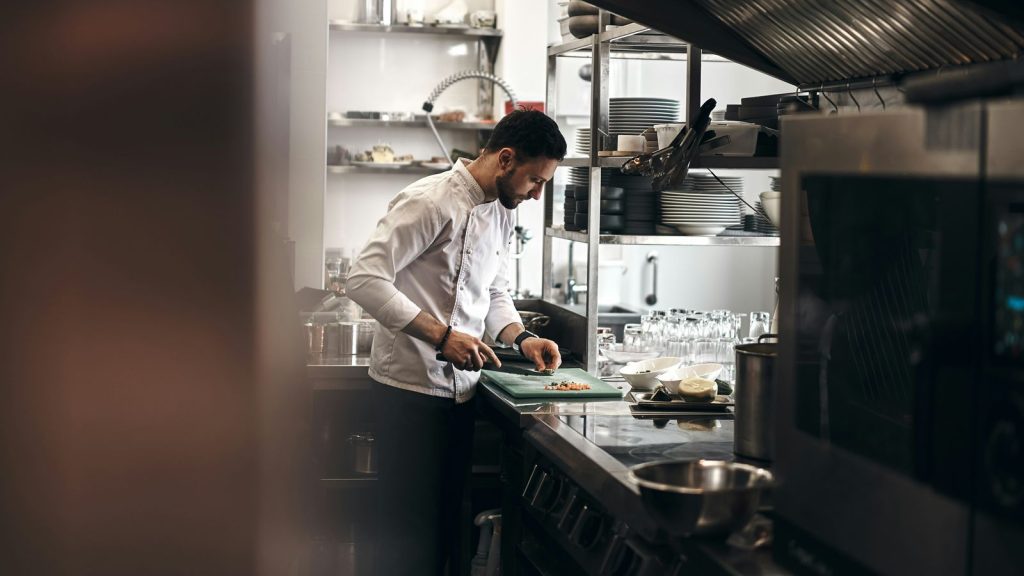
A chef coat takes more abuse in one shift than most linens take in a week. Grease, sauce, heat, and sweat all land on the same white cotton, and by the end of service the coat tells the story of every dish that went out. Our chef coat service collects your kitchen’s coats on your regular pickup day, launders and presses them, and returns them with the rest of your restaurant linen, so every cook starts the shift in a coat that looks the part.
The Importance of Heavy-Duty Laundering
Kitchen soil is different from dining room soil. Cooking oil works deep into the weave, tomato and spice stains set under heat, and a coat worn near the fryer picks up a film that a standard wash cycle tends to leave behind. Chef coats run through a dedicated wash program built for this kind of load, with pre-treatment on the heavy spots, higher water temperatures, and a rinse that clears out detergent and residue. The result is a coat that comes back white rather than dingy gray.
The Importance of Sanitizing the Garment
A chef coat sits between raw ingredients and the person handling them all day. Washing at temperatures that kill bacteria, followed by full drying, keeps the garment itself from carrying anything back into the kitchen. This matters to health inspectors, and it matters more to the people wearing the coats for ten hours at a time.
The Importance of a Pressed, Uniform Look
An open kitchen, a chef’s table, or a quick appearance at the pass puts the kitchen team in front of guests. A pressed coat with crisp lapels and clean cuffs reads as professional from across the room. Every coat is pressed on the same equipment at the same settings, so the sous chef and the line cook match, and this week’s delivery matches last week’s.
The Importance of Enough Coats on the Shelf
Most kitchens need at least two coats per cook per shift, with extras for spills and for busy weekends. A scheduled service sets a quantity that covers your roster and your peak days, then holds to it. Coats go out soiled on pickup day and come back clean on delivery day, so no one is hunting for a spare coat at 4 p.m. on a Friday.
The Importance of Inspection and Repair
Buttons pop, sleeves snag, and pockets tear in a working kitchen. Every coat is checked after laundering. Loose buttons are reattached and small tears are mended before the coat returns to you, and coats that have reached the end of their useful life are pulled from rotation and replaced in your count, so the shelf never fills up with coats no one wants to wear.
If you would like chef coats added to your scheduled linen service, contact us to review your kitchen roster and set the right quantity for your delivery schedule.